
Here is Part 2 of my original short story "At the Peony Tea House". Enjoy.
"At the Peony Tea House" - Part 2
by Charles Shaver. Copyright 2008 by Charles Shaver. All rights reserved.
************************************
PART II
THE FOX AND THE FROG: Wherein Wu Chan Chu and Comet Fox Fight; Old Friends Reminisce; A Small Fortune Goes Missing
************************************
Comet Fox danced back and forth. His arms swayed from side to side while his feet took turns supporting him atop the polished wood floor of the Peony. His red fur waved as an ocean at sunset.
Wu Chan Chu was confused by this new dance. Never had she seen her old friend move so. "What new trickery have you learned in our time apart?" she asked.
"Come," Comet Fox challenged, sneering, "Find out what new tricks this old dog has learned."
Wu Chan Chu charged Comet Fox, but Comet Fox cartwheeled sideways and was suddenly at his opponent's side with a fist in her gut.
Wu Chan Chu gave a small croak.
The crowd roared with laughter and cheers.
Wu Chan Chu stepped away, coughed, and said, "Beautifully executed, but tricks will not win a war."
Comet Fox answered by jumping, flying, darting towards Wu Chan Chu with great speed.
Wu Chan Chu took a defensive stance, her eyes upon the swiftly approaching fists. She brought up her arms in a block.
Comet Fox, just before hitting Wu Chan Chu, pulled up quickly, flipping mid-air over Wu Chan Chu. His fists, instead of landing upon Wu Chan Chu's raised arms, floated instead to his sides while his head slammed into the top of Wu Chan Chu's skull in a fierce headbutt. She groaned, coughing, gurgling. Blood sprayed from her left nostril.
Comet Fox landed softly upon the wood floor behind her.
Wu Chan Chu wiped the blood from her nose and turned to face Comet Fox. She wanted to scream her dissatisfaction at him, but chose to take a defensive stance once more instead.
Comet Fox flew at her once more. This time Wu Chan Chu was ready. She jumped, meeting him mid-air with a knee to his chest. Both fell to the ground, Wu Chan Chu upon her feet and Comet Fox Rolling on his side.
Comet Fox rolled up to his feet, sneering, laughing quietly.
The two warriors fought for hours, testing each other, feeling each other out. For a long time Comet Fox showed he had the edge, throwing more punches, landing more blows. In the end, both were bloody and bruised and the crowd was captivated.
"We have fought long enough," Comet Fox whispered to his opponent. "Let us end this."
"Indeed," Wu Chan Chu agreed. "Let's end this."
They circled, increasing distance from one another. When at lasdt they were at the farthest edges of the wooden floor from one another, they charged. Comet Fox flew. Wu Chan Chu jumped. Both struck and both blows were hard. Comet Fox's fist found Wu Chan Chu's neck. It sank into deep folds, finding esophagus and pinching it. Wu Chan Chu's eyes grew wide as she gasped for air.
As Comet Fox's blow landed, so too did Wu Chan Chu's. She brought both her knees up, one slightly above the other. One struck Comet Fox in the chest, expelling all the air from his body. The other struck his gut, sending bile into his throat.
Comet Fox and Wu Chan Chu both fell to the floor, coughing, choking, rolling in pain.
The people screamed, they cheered. They cried out for more. Men grabbed men and shook each other in excitement. Women grabbed women and screeched with joy. But soon, as the two fighters rolled across the wooden floor in agony, they all turned to wonder at who should be declared the winner. A clear winner was needed to settle all the bets.
The owner of the Peony stepped forward. "Let us agree," he cried out, "that whosoever should stand first shall be declared the winner!"
The people cheered, then grew silent. Then chants began, some for the champion Wu Chan Chu, some for the challenger Comet Fox.
Both struggled to stand. Both fell in doing so. But it was at last Wu Chan Chu who first got to her feet and was declared winner.
The crowd screamed with delight. A few booed. All applauded as the two fighters walked off the floor together.
************************************
The room was small and smelled of stank tobacco and sweat. Comet Fox couldn't quite get used to it. There was a small bed and a blue glass hookah in the center of the room. Flies and cockroaches skittered and flew everywhere.
Wu Chan Chu fell atop the bed. Comet fox used an overturned wood crate as a seat. He dabbed at blood trickling from his mouth with his pawed hand.
Wu Chan Chu busily, meticulously prepared some herbal leaves in the hookah. She carefully lit the flavored leaves and offered Comet Fox a hose. He took it and drew on the sweet smoke. It tasted of peaches. His mind went wild and he puffed out two more clouds of smoke. Wu Chan Chu did the same with another hose.
"You learned a new style," Wu Chan Chu said.
"And you're as strong as ever," Comet Fox replied.
"Tell me, where did you learn this new way of fighting?"
"After we parted," Comet Fox said, "I traveled the mortal realm for quite a time. I sowed a few seeds, drank a lot, and woke up one day with an island sun blinding me. On that island is where I learned my new fighting style. There I met Master Bakongo. There I learned from him Capoeira."
************************************
The Island of Black Soil and Oranges was small, sunny, bright and off the coast of a southern continent. It was populated by a mere few hundred and was occasionally adorned with hardened lava floes from a long-dead volcano. The people were happy, their lives hard but good. Fish and oranges were staples in their diet. It was here that Comet Fox awoke from a drunken haze.
He wandered the island until he found several people, both men and women, working on nets and lines and preparing foods before the day's fishing. Comet Fox asked, "I beg for your kindness... have you something for me to eat?"
The people laughed and scoffed at him. A woman named Risueña Cara grabbed his pawed hand and placed some netting in it that needed to be repaired, stating, "Work first, then we eat."
"But I'm hungry and I do not live here," Comet Fox explained.
"Then you do not eat here, either," said the Risueña Cara.
Comet Fox, with great reluctance, learned how to tie and repair nets for fishing that morning. As soon as the work was through, the whole community came out to eat. He was accepted into their midst, many gawking at him and asking questions, but none were mean, foul or inconsiderate. They allowed him to eat all he wanted and he ate his fill.
"Come," said Risueña Cara once more, "we must go to work."
"But, but..." Comet Fox stammered. "I do not live here."
"But if you would like to, you must work."
Fearing offending his hosts, Comet Fox boarded a boat and helped paddle out and helped with the day's fishing.
Later that night the groups of boats return with fish and food for the night's meal.
And so went Comet Fox's life for many days. He would awake, repair tools, eat, fish all day, return to the island and eat and sleep. He lost weight, grew muscles, gained clarity of mind.
After many weeks on the Island of Black Soil and Oranges, the people had a Moon Festival. Comet Fox did his part in the festival's preparation. He fished, decorated, chopped wood for big bonfires.
On the night of the Moon Festival the people danced, ate and ate and sang. At one point someone produced a ball and a type of singing, dancing game was started. Comet Fox found himself thrown into the mix. He laughed and hooted and cheered as he kicked the ball and danced and celebrated with the people. The people cheered his deft athleticism at the game. He flew above their heads with torches in each hand to light the night sky already bright with a full moon.
The following morning when he awoke for the day's work, he was told not do so.
"But why?" he asked.
"Someone wishes to speak with you today," Risueña Cara told him.
"Who?"
"Just stay while we go out fishing today," said Risueña Cara.
Comet Fox did as he was told, though he wondered if he had offended the good people of the island in some way the night before.
He sat along the shore a long time after the people had paddled out to sea before someone approached him. He was an elderly man, wrinkled with time and skin dark with the sun. "I am Akan Bakongo," the old man introduced himself.
"I am Comet Fox."
"I saw you playing our game last night."
"The one with the ball?"
"Yes."
Comet Fox smiled, "Yes, I liked it."
"You are quite good at it, quite natural to physical movement."
"Comet Fox shrugged, "I guess so."
"Come," Akan Bakongo said. He lead Comet Fox into a stand of palms Comet Fox had seen but never thought to venture into. Deep within was a small hut with a single room within. They entered. The hut smelled moist and alive. In the center of its lone room was a ball much like Comet Fox had played with the night before at the Moon Festival. Akan Bakongo tapped it with his foot. The ball slowly rolled to Comet Fox's feet.
"Kick it back," Akan Bakongo said.
Comet Fox did so and did so slowly, just as it had been kicked to him.
Akan Bakongo, with a quick twist of his ankle, kicked the ball again, this time sailing at a high speed toward Comet Fox's head.
Comet Fox deflected the ball with his head. The ball fell back to the floor and rolled towards Akan Bakongo who kicked it once more, this time even harder and with greater speed.
Comet Fox swung his arms, twisting his body as he had dancing the night before, and leaned way back to avoid the ball aimed for his chest. "What are you trying to do?" Comet Fox demanded as he straightened.
"Teach you."
"Teach me what? How to avoid being hit by a ball?"
"Exactly. Now return the ball to me. And keep those legs moving as if dancing, just like in the game last night."
************************************
"And so began my training in Capoeira," Comet Fox explained. "What of you? How is it you've come to be the champion here?"
Wu Chan Chu sighed. "XXiao-tep and I traveled together a long time after we left the Cottonwood Chamber, but eventually the time came for us to part. He needed to go his way and I mine. I supported myself by fighting here and there for money. Finally, a traveling immortal told me of this place and said there's money to be made here for a good fighter. As champion, I get ten percent of the house's take on the gambling plus this room to stay in and all the tea and food I want. It's been a pretty good life for me. A hard one, but a good one."
Comet Fox nodded.
A great commotion erupted in the hall outside the door. Wu Chan Chu flicked her tongue out and used it to slide the door open. People we rerunnign after the owner of the tea house.
Wu Chan Chu stood up and left, Comet Fox following closely behind.
When they reached the owner's side, Wu Chan Chu asked, "What is it? What's the problem?"
"Oh, my champion!" cried the owner. "The coffers! The Peony's coffers have gone missing! We are broke! Someone has stolen all our money!"
Wu Chan Chu grunted, sighed, then looked at Comet Fox.
"What? Why are you looking at me?" Comet Fox asked.
*****************************************
Look for Part 3 next Friday!!!
Friday, January 11, 2008


Friday, January 4, 2008
"At the Peony Tea House" - Part 1
After a two week hiatus, I'm back to make the first post of the new year. I hope everyone's holiday season went well. Mine was good, if not rushed.
Today I present to you Part 1 of "At the Peony Tea House", a story expanding upon the characters and continuing the story lines from the five-act story "The Children of Gods" which I wrote and posted last year. These are fantasy Wuxia stories with anthropomorphic characters. I hope you enjoy.
Here are links to the original "The Children of Gods" story:
"The Children of Gods" Act I
"The Children of Gods" Act II
"The Children of Gods" Act III
"The Children of Gods" Act IV
"The Children of Gods" Act V
Afterword
Let's get started.
"At the Peony Tea House"
by Charles Shaver. Copyright 2008 by Charles Shaver. All rights reserved.
************************************
PART I
THE RESIDENT OF THE PEONY: Wherein Wu Chan Chu is Challenged by Comet Fox
************************************
Popular with those that walk with divinity is the Peony Tea House, though it is not so innocent and charming as its name would suggest. It is true that many an undertaking generally considered immoral or otherwise in poor taste finds a home within the tea house, yet gods and immortals of variety frequent the establishment. All affectionately called the tea house simply "The Peony".
The house is painted with the greens of spring and a pink so light one might consider it white if not glared upon with some small intensity. Tea is their specialty, and few dislike it, but wine is most common.
The house never closes. In that there were many that could in some small way consider this unimposing structure their home. Few, however, could make that claim with any truth. Only the owners and select few of the staff could truly call the tea house home. Among those was Wu Chan Chu, as she was the tea house's resident champion and as champion was granted a room, free of charge, for her lodging.
Sweat and the haze from every imaginable smoking herb hung in the air of the main room of the tea house. Tables line the walls as do booths and three bars. The center of the room is clear of all obstruction and has a floor of fine woods, polished though scarred. If one did not know its true purpose, one might consider it a proper dance floor.
A dance of sorts does occur on the floor, but not that which is generally considered fine and civilized. For the Peony Tea House, above all else - before its duties as a tea house, before its use as a brothel, before its importance as a gathering place, before its liquors and multiple indulgences - is first and foremost home to games of physical skill, of combat.
Wu Chan Chu stood at the center of the polished floor. Beside her was a small man, one of the owners, calling for a challenger. She had lost some weight since she had fought side-by-side with her brother, Xiao-tep, long ago in the Cottonwood Chamber. She still bore the mark he had given her in the belly.
Her eyes drifted up, up to a small loft with a veranda overlooking the floor. There, in a plush chair and accompanied by various peoples and creatures sat the god Hanuman, seeking the joys of night.
Wu Chan Chu's fists opened and closed in anticipation.
"Come! Challengers! We need challengers! We will give good odds to anyone with fighting skills!" called out the owner through a leather funnel that caused his voice to boom, echoing off the walls of the tea house.
His beckoning was answered by a man claiming to be immortal. Though small, he was muscular and looked quite athletic. He stepped forward to the center of the polished floor.
Bets were placed, cheers thrown out, excitement grew. Everyone had come to witness the grand and fine champion of the Peony Tea House.
The owner removed himself from the floor and the fight began.
The stranger approached with an aggressive stance, throwing a quick and short punch to test his range against Wu Chan Chu's. The frog demi-goddess had to do nothing to avoid the punch. The stranger followed with a quick and low kick to her legs. She blocked it and he shifted with blinding speed to deliver a similar kick with his other foot. This one hit her calf and sent a bit of pain into her body. She blinked but did nothing more.
The stranger bolted in with a kick aimed high at her chest. Wu Chan Chu blocked the kick with a folded arm and countered with a kick to his inner thigh.
The stranger worked in closer, trying to get within her comfortable range, and was finally left standing near her chest. Wu Chan Chu threw punch after punch, haymaker after haymaker at the stranger but his arms were folded at his sides and took the brunt of the damage. She swung wider and wider, opening her chest more and more to attack. At last, the stranger attacked.
He delivered three punches, two to her chest and one to the healed cut on her belly.
Wu Chan Chu lifted her knee into the face of the stranger and he was sent reeling from the blow. She pressed the attack ad the crowd cheered her on. She threw first one knee then the other into his chest as he tried to escape backwards. She let him go, let him catch his breath. The people screamed for blood and booed their champion for allowing the man time to recuperate.
The stranger gathered himself and slowly started in towards the center of the floor once more.
Wu Chan Chu ran, jumped in a small way for her, twisting the weight of her body and bringing her knee up and out like a spearhead. She flew higher than most men are tall and her knee came crashing down on his skull. Blood sprayed from his nose, coughing from between his teeth and the stranger fell to the floor.
Wu Chan Chu collected her prize money for the win as the stranger was helped up and out of the tea house.
The owner appeared once more.
He beckoned again through the leather funnel for challengers. He called out, threatened and finally begged for someone to step forward, but no one would. He did not want to call an end to the evening's festivities. An early end meant less wine and tea sold, less bets placed, less money made.
"Surely," said he, "someone finds our champion full of nothing but luck. Please! I beg you! Rid me of her!"
Wu Chan Chu had heard this all before and was not offended. The owner was simply doing his job, making the sale, tempting the would-be challengers in the crowd too full of self-doubt or not yet full enough of liquor to step forward.
"Come! All challengers! Anyone? What a sad night this would be with such a pathetic ending! We need a new challenger! Can we allow our honored guest," at this the owner waved a hand towards Hanuman seated high above, "go home tonight without proper entertainment?"
At last the crowd parted. At last someone stepped forward.
Through the crowd came an old familiar face. Through the crowd came Comet Fox.
"I will challenge your champion!" he proclaimed and smiled at Wu Chan Chu.
Comet Fox now donned a sash about his chest, yellow like wheat in the fall, and holding to his form his ulus, his weapons of choice.
As the fox-god and frog demi-goddess drew together at the center of the floor, Wu Chan Chu spoke. "We entertain a god tonight."
"What's a god to a god?" Comet Fox asked.
"Let's tear this place apart."
"I won't hold back," Comet Fox sneered. They backed away from one another and the owner announced the fight before disappearing into the crowd to collect bets.
The gathered crowd chanted, "KU-MI-TE! KU-MI-TE! KU-MI-TE!"
Wu Chan Chu squared herself.
Comet Fox backed away, turning to the crowd and clapping his pawed hands together in time with their chanting. The crowd began clapping along, creating a riotous beat echoing throughout the tea house.
He then turned back towards Wu Chan Chu and bent forward, his legs kicking up and back like a rooster scratching at the ground.
As he cartwheeled, Wu Chan Chu thought her old friend wanted to tumble rather than fight. Confused, she knew then Comet Fox had not lost his roots as the son of a trickster god.
**********************************************
Check back next week for Part 2 of "At the Peony Tea House"! Thanks for reading! Let's have a good new year!
Today I present to you Part 1 of "At the Peony Tea House", a story expanding upon the characters and continuing the story lines from the five-act story "The Children of Gods" which I wrote and posted last year. These are fantasy Wuxia stories with anthropomorphic characters. I hope you enjoy.
Here are links to the original "The Children of Gods" story:
"The Children of Gods" Act I
"The Children of Gods" Act II
"The Children of Gods" Act III
"The Children of Gods" Act IV
"The Children of Gods" Act V
Afterword
Let's get started.
"At the Peony Tea House"
by Charles Shaver. Copyright 2008 by Charles Shaver. All rights reserved.
************************************
PART I
THE RESIDENT OF THE PEONY: Wherein Wu Chan Chu is Challenged by Comet Fox
************************************
Popular with those that walk with divinity is the Peony Tea House, though it is not so innocent and charming as its name would suggest. It is true that many an undertaking generally considered immoral or otherwise in poor taste finds a home within the tea house, yet gods and immortals of variety frequent the establishment. All affectionately called the tea house simply "The Peony".
The house is painted with the greens of spring and a pink so light one might consider it white if not glared upon with some small intensity. Tea is their specialty, and few dislike it, but wine is most common.
The house never closes. In that there were many that could in some small way consider this unimposing structure their home. Few, however, could make that claim with any truth. Only the owners and select few of the staff could truly call the tea house home. Among those was Wu Chan Chu, as she was the tea house's resident champion and as champion was granted a room, free of charge, for her lodging.
Sweat and the haze from every imaginable smoking herb hung in the air of the main room of the tea house. Tables line the walls as do booths and three bars. The center of the room is clear of all obstruction and has a floor of fine woods, polished though scarred. If one did not know its true purpose, one might consider it a proper dance floor.
A dance of sorts does occur on the floor, but not that which is generally considered fine and civilized. For the Peony Tea House, above all else - before its duties as a tea house, before its use as a brothel, before its importance as a gathering place, before its liquors and multiple indulgences - is first and foremost home to games of physical skill, of combat.
Wu Chan Chu stood at the center of the polished floor. Beside her was a small man, one of the owners, calling for a challenger. She had lost some weight since she had fought side-by-side with her brother, Xiao-tep, long ago in the Cottonwood Chamber. She still bore the mark he had given her in the belly.
Her eyes drifted up, up to a small loft with a veranda overlooking the floor. There, in a plush chair and accompanied by various peoples and creatures sat the god Hanuman, seeking the joys of night.
Wu Chan Chu's fists opened and closed in anticipation.
"Come! Challengers! We need challengers! We will give good odds to anyone with fighting skills!" called out the owner through a leather funnel that caused his voice to boom, echoing off the walls of the tea house.
His beckoning was answered by a man claiming to be immortal. Though small, he was muscular and looked quite athletic. He stepped forward to the center of the polished floor.
Bets were placed, cheers thrown out, excitement grew. Everyone had come to witness the grand and fine champion of the Peony Tea House.
The owner removed himself from the floor and the fight began.
The stranger approached with an aggressive stance, throwing a quick and short punch to test his range against Wu Chan Chu's. The frog demi-goddess had to do nothing to avoid the punch. The stranger followed with a quick and low kick to her legs. She blocked it and he shifted with blinding speed to deliver a similar kick with his other foot. This one hit her calf and sent a bit of pain into her body. She blinked but did nothing more.
The stranger bolted in with a kick aimed high at her chest. Wu Chan Chu blocked the kick with a folded arm and countered with a kick to his inner thigh.
The stranger worked in closer, trying to get within her comfortable range, and was finally left standing near her chest. Wu Chan Chu threw punch after punch, haymaker after haymaker at the stranger but his arms were folded at his sides and took the brunt of the damage. She swung wider and wider, opening her chest more and more to attack. At last, the stranger attacked.
He delivered three punches, two to her chest and one to the healed cut on her belly.
Wu Chan Chu lifted her knee into the face of the stranger and he was sent reeling from the blow. She pressed the attack ad the crowd cheered her on. She threw first one knee then the other into his chest as he tried to escape backwards. She let him go, let him catch his breath. The people screamed for blood and booed their champion for allowing the man time to recuperate.
The stranger gathered himself and slowly started in towards the center of the floor once more.
Wu Chan Chu ran, jumped in a small way for her, twisting the weight of her body and bringing her knee up and out like a spearhead. She flew higher than most men are tall and her knee came crashing down on his skull. Blood sprayed from his nose, coughing from between his teeth and the stranger fell to the floor.
Wu Chan Chu collected her prize money for the win as the stranger was helped up and out of the tea house.
The owner appeared once more.
He beckoned again through the leather funnel for challengers. He called out, threatened and finally begged for someone to step forward, but no one would. He did not want to call an end to the evening's festivities. An early end meant less wine and tea sold, less bets placed, less money made.
"Surely," said he, "someone finds our champion full of nothing but luck. Please! I beg you! Rid me of her!"
Wu Chan Chu had heard this all before and was not offended. The owner was simply doing his job, making the sale, tempting the would-be challengers in the crowd too full of self-doubt or not yet full enough of liquor to step forward.
"Come! All challengers! Anyone? What a sad night this would be with such a pathetic ending! We need a new challenger! Can we allow our honored guest," at this the owner waved a hand towards Hanuman seated high above, "go home tonight without proper entertainment?"
At last the crowd parted. At last someone stepped forward.
Through the crowd came an old familiar face. Through the crowd came Comet Fox.
"I will challenge your champion!" he proclaimed and smiled at Wu Chan Chu.
Comet Fox now donned a sash about his chest, yellow like wheat in the fall, and holding to his form his ulus, his weapons of choice.
As the fox-god and frog demi-goddess drew together at the center of the floor, Wu Chan Chu spoke. "We entertain a god tonight."
"What's a god to a god?" Comet Fox asked.
"Let's tear this place apart."
"I won't hold back," Comet Fox sneered. They backed away from one another and the owner announced the fight before disappearing into the crowd to collect bets.
The gathered crowd chanted, "KU-MI-TE! KU-MI-TE! KU-MI-TE!"
Wu Chan Chu squared herself.
Comet Fox backed away, turning to the crowd and clapping his pawed hands together in time with their chanting. The crowd began clapping along, creating a riotous beat echoing throughout the tea house.
He then turned back towards Wu Chan Chu and bent forward, his legs kicking up and back like a rooster scratching at the ground.
As he cartwheeled, Wu Chan Chu thought her old friend wanted to tumble rather than fight. Confused, she knew then Comet Fox had not lost his roots as the son of a trickster god.
**********************************************
Check back next week for Part 2 of "At the Peony Tea House"! Thanks for reading! Let's have a good new year!
Thursday, December 13, 2007
"I Am Legend" once more on the big screen
I'm posting early (Thursday instead of my usual Friday) because I've been ill lately and want to take tomorrow to rest. I have some energy now so... here goes!
In the past year or two one of my growing favorite science fiction authors has been Richard Matheson. His credits include scripts for The Twilight Zone, Star Trek, The Incredible Shrinking Man, and, his most famous and perhaps most influential work, the novel I Am Legend.
I Am Legend has once again been adapted for the silver screen and will be released into theaters tomorrow.
The previous film renditions of I Am Legend include The Last Man on Earth starring Vincent Price and The Omega Man starring Charlton Heston.
Why is Matheson worthy of my praise? The power and epic nature of his writing. His tales, while generally decent narratives, almost always takes on a meditative nature that looks into the reality of life and an individual's place in the universe. And I do mean the universe. Yeah, he can be that epic.
Not all of his writings are worthy of praise, however. He also wrote the novel that the Robin Williams movie What Dreams May Comes was based on. It was a very slow tale and more of a Jean-Luc Godard-style talking-heads piece than a real story. It didn't work for me.
He also scripted *ulp* Jaws 3-D. If you've not seen it, don't. It's not exactly the best movie in the franchise.
I'm hoping the new I Am Legend starring Will Smith will at least be decent. I can't say it will be. While Will Smith's movies have always done well financially, I find them generally far from the best science fiction ever made for film. I don't think I Am Legend will be bad, but I don't think I can expect it to carry the weight of the novel. Maybe I'll be surprised... maybe it will. One can only hope. And I'm willing to give it a shot.
Here's some stuff from off YouTube about Richard Matheson and I Am Legend.
A PIECE DISCUSSING RICHARD MATHESON:
THE OMEGA MAN TRAILER:
THE LAST MAN ON EARTH TRAILER:
THE NEW I AM LEGEND STARRING WILL SMITH (TRAILER):
RICHARD MATHESON ON DARK DREAMERS SPEAKING ABOUT HIS WORK:
In the past year or two one of my growing favorite science fiction authors has been Richard Matheson. His credits include scripts for The Twilight Zone, Star Trek, The Incredible Shrinking Man, and, his most famous and perhaps most influential work, the novel I Am Legend.
I Am Legend has once again been adapted for the silver screen and will be released into theaters tomorrow.
The previous film renditions of I Am Legend include The Last Man on Earth starring Vincent Price and The Omega Man starring Charlton Heston.
Why is Matheson worthy of my praise? The power and epic nature of his writing. His tales, while generally decent narratives, almost always takes on a meditative nature that looks into the reality of life and an individual's place in the universe. And I do mean the universe. Yeah, he can be that epic.
Not all of his writings are worthy of praise, however. He also wrote the novel that the Robin Williams movie What Dreams May Comes was based on. It was a very slow tale and more of a Jean-Luc Godard-style talking-heads piece than a real story. It didn't work for me.
He also scripted *ulp* Jaws 3-D. If you've not seen it, don't. It's not exactly the best movie in the franchise.
I'm hoping the new I Am Legend starring Will Smith will at least be decent. I can't say it will be. While Will Smith's movies have always done well financially, I find them generally far from the best science fiction ever made for film. I don't think I Am Legend will be bad, but I don't think I can expect it to carry the weight of the novel. Maybe I'll be surprised... maybe it will. One can only hope. And I'm willing to give it a shot.
Here's some stuff from off YouTube about Richard Matheson and I Am Legend.
A PIECE DISCUSSING RICHARD MATHESON:
THE OMEGA MAN TRAILER:
THE LAST MAN ON EARTH TRAILER:
THE NEW I AM LEGEND STARRING WILL SMITH (TRAILER):
RICHARD MATHESON ON DARK DREAMERS SPEAKING ABOUT HIS WORK:
Friday, December 7, 2007
Robots on Mars!!!
Here's a short documentary with an intimate look at NASA's plan to build a robot colony on Mars.
Saturday, December 1, 2007
Bonus Post! Giant Robo
This is TOEI's orignal tokusatsu TV series for kids called Giant Robo. Here in the United States it was dubbed Johnny Sokko and His Flying Robot.
SEE ALSO:
GIGANTOR
KAIJU FAN ONLINE
SEE ALSO:
GIGANTOR
KAIJU FAN ONLINE
Friday, November 30, 2007
In the Far Future... There Can Be Only War!
I'm featuring two different games today. Both are sci-fi strategy games. The first is the new Warhammer 40K video game due out for the Nintendo DS and Sony PSP called Squad Command.
The other is a rival offering to 40K by the French game company Rackham. It's called AT-43.
WARHAMMER 40,000: SQUAD COMMAND:
AT-43 ACCORDING TO WIKI:
"AT-43: No one Escapes War! is a science fiction tabletop wargame using 28mm miniature figures and terrain to scale developed and published by the French company Rackham.
Released in December 2006, the game features pre-painted plastic miniatures of mechs and infantry units with corresponding cards showing the stats and gameplay options for each unit type."
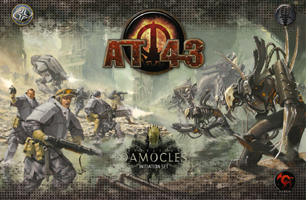
Here's the newest expansion army. They're called Karmans:


U.N.A. FORCES:

THERIAN FORCES:


RED BLOK ARMY:


The other is a rival offering to 40K by the French game company Rackham. It's called AT-43.
WARHAMMER 40,000: SQUAD COMMAND:
AT-43 ACCORDING TO WIKI:
"AT-43: No one Escapes War! is a science fiction tabletop wargame using 28mm miniature figures and terrain to scale developed and published by the French company Rackham.
Released in December 2006, the game features pre-painted plastic miniatures of mechs and infantry units with corresponding cards showing the stats and gameplay options for each unit type."
Here's the newest expansion army. They're called Karmans:
U.N.A. FORCES:
THERIAN FORCES:
RED BLOK ARMY:
Friday, November 23, 2007
Robot Thanksgiving
Abraham Lincoln established Thanksgiving Day as a national holiday in the United States in 1863. In honor and in celebration of the holiday, here's the funniest 'virtual' robot fight in film history:
Movie: Eurotrip
Movie: Eurotrip
Friday, November 16, 2007
Der Golem: Ancient Jewish Folktale, Opera and The Simpsons Did It
In conjunction with friend and comrade in nerdiness J. Ho, today he and I are posting about golems. I challenged him to a timed drawing, giving him scant few minutes to draw a golem. He posted the end product on his blog today.
For my part I'll be posting a few things about the golem, its history and pop culture references.
Perhaps through video games (most specifically role-playing games) we know the golem today as a humanoid creature made of stone or other such earthy materials. Here is the 'classic' image of the golem creature from the Dragon Quest video games:

The origins of the golem are similar to our modern idea of what a golem is. M-W.com defines the word 'golem' as: "an artificial human being in Hebrew folklore endowed with life". It is from this folklore that we get our modern golem.
The most famous and one of the earliest mass-media representations of the golem creature is the 1920 film The Golem: How He Came into the World and preceded by the 1915 film Der Golem (translated from German as 'The Golem' but originally released here in the United States under the title 'The Monster of Fate'). I found this on YouTube:
The basic plot of the golem tale is this: An antique dealer buys an old humanoid statue made of clay that was created by a Rabbi centuries before. By placing words written on paper into the open mouth of the golem, the golem will come to life and obey the written command. When the golem is brought to life by the antique dealer, it falls in love with the antique dealer's wife. Saddened the antique dealer's wife does not requite its love, the golem begins murdering people.
Here's an original poster for the film:

And here's a picture of how the golem was portrayed in the film:

If that picture looks familiar, it's probably because (in the immortal words of General Disarray): "The Simpsons did it!" In the 2006 Treehouse of Horror XVII episode of The Simpsons, one of the segments parodies the film. The segment was called "You Gotta Know When to Golem".
John Casken also wrote an opera called Golem that premiered in 1989, retelling the story of the creature with original music.
On a last related note: While looking for video of the golem, I found this on YouTube. This golem costume was hand-made from about five foam mattresses. Rad!
ADDITIONAL SOURCES:
Monstropedia
For my part I'll be posting a few things about the golem, its history and pop culture references.
Perhaps through video games (most specifically role-playing games) we know the golem today as a humanoid creature made of stone or other such earthy materials. Here is the 'classic' image of the golem creature from the Dragon Quest video games:
The origins of the golem are similar to our modern idea of what a golem is. M-W.com defines the word 'golem' as: "an artificial human being in Hebrew folklore endowed with life". It is from this folklore that we get our modern golem.
The most famous and one of the earliest mass-media representations of the golem creature is the 1920 film The Golem: How He Came into the World and preceded by the 1915 film Der Golem (translated from German as 'The Golem' but originally released here in the United States under the title 'The Monster of Fate'). I found this on YouTube:
The basic plot of the golem tale is this: An antique dealer buys an old humanoid statue made of clay that was created by a Rabbi centuries before. By placing words written on paper into the open mouth of the golem, the golem will come to life and obey the written command. When the golem is brought to life by the antique dealer, it falls in love with the antique dealer's wife. Saddened the antique dealer's wife does not requite its love, the golem begins murdering people.
Here's an original poster for the film:
And here's a picture of how the golem was portrayed in the film:
If that picture looks familiar, it's probably because (in the immortal words of General Disarray): "The Simpsons did it!" In the 2006 Treehouse of Horror XVII episode of The Simpsons, one of the segments parodies the film. The segment was called "You Gotta Know When to Golem".
John Casken also wrote an opera called Golem that premiered in 1989, retelling the story of the creature with original music.
On a last related note: While looking for video of the golem, I found this on YouTube. This golem costume was hand-made from about five foam mattresses. Rad!
ADDITIONAL SOURCES:
Monstropedia
Friday, November 9, 2007
Voyage Dans La Lune -- A Trip to the Moon by Georges Méliès
Today's offering comes from the earliest parts of film history. "A Trip to the Moon" is widely acknowledged as one of the first, if not the first, science fiction film. Made in 1902 by Georges Méliès, a stage magician, the film was then hailed as a technological feat with astounding special effects including its blend of animation and live actors. The story is loosely based upon From the Earth to the Moon by Jules Verne and The First Men in the Moon by H. G. Wells, both being very popular at the time.
A Side Note: The band The Smashing Pumpkins made a relatively famous homage to the film with their music video Tonight, Tonight which can be viewed here.
A Side Note: The band The Smashing Pumpkins made a relatively famous homage to the film with their music video Tonight, Tonight which can be viewed here.
Friday, November 2, 2007
Vikings vs Zombies Part 2 -- "Hunter of the Dead"
Sorry for the belated post today. My disrupted sleeping schedule has really thrown me off.
And now for Part 2 of "Hunter of the Dead"!
“Ordak!” Haffdann’s cries went unanswered. His hands had found the grip of a short sword and it was working well against the horrors raiding the huts for flesh. Strapped to the other arm was a shield he used to bash and push away the offending monstrous raiders.
Haffdann estimated the creatures’ numbers to be thirty, perhaps more, but seemed as a hundred score for no matter how he worked the blade against them, Haffdann could not send them to their graves.
Oil had sparked into flame. Great billowing black clouds roild before Haffdann’s eyes until he could make no sense of direction.
From out of dark mists came a form without features or with features hidden by the dark, curling fingers of smoke. Haffdann gripped his prized sword and shield, readied himself. “Come ye beast! Come be met by the steel of Haffdann the Frenzied!”
“Ho, Haffdann!” came a booming baritone from the shadows in shadowy smoke. “When last we met you were Haffdann the Pig-herder!”
Features resolved into view. Haffdann straightened, relaxing a bit, recognizing the insane Siggurd the Berserker.
“I do not know what these men are,” he said to Haffdann, “but by Tyr I’ve not had so much fun killing! They’re better than slaying Saxons!”
“You would like ‘em. They fight back.”
Siggurd stood over seven feet tall and had blazing red hair made redder still by blood and reflecting fire. His beard, as fiery as his braided mane, was shaved only at the chin and neck so as to appear his sideburns had overrun the sides of his face and hung low, braided beyond the jaw into two pointed horns that hung to his chest. In his hand he carried a war axe.
Siggurd used his free hand to slap Haffdann on the shoulder in a friendly gesture. Haffdann nearly fell over from the playful blow.
A creature melted from the darkness. Siggurd readied his axes and eyed Haffdann. “Choppy-choppy!” he said as he charged, swinging, not waiting for Haffdann. The beast’s head was cleanly separated from its body and fell to the snow, its mouth biting at the air. The headless body groped aimlessly.
Siggurd swung again. The blade sliced down through the shoulder of the headless body, cleaving through the chest and out the side of the torso. Ribs cracked and popped and half the torso fell away, its lone arm clawing desperately at the frosty ground being tainted red with what little blood the body was spilling.
With a third swing the legs came free, kicking helplessly.
“What wonderful enemies!” Siggurd bellowed. “Tyr blesses us this day with enemies that never stop fighting!”
Haffdann followed reluctantly as Siggurd pressed into the smoky shadows, spilling seas of blood.
* * * * *
Ordak stepped out of the hut, his face and furs stained with small splotches of red. Few of the monsters remained and through the choking smoke he could see Siggurd happily tending to them. Haffdann came running to his side.
“Thank the gods,” Haffdann huffed, his face now smeared with the gore of unholy battle. “Your woman… how fares she?”
Ordak said nothing. He did not so much as look at his friend. He stood silently staring at his feet, wondering.
Haffdann understood. He placed a gentle hand on Ordak’s shoulder and said, “Your sorrows are mine.”
Ordak found a wood pile and sat there. Ovbjorn approached a bow in his hand and a quiver strapped to his back. Siggurd, laughing, finished his dismemberings and joined them.
“A bow will leave you in want of a blade,” Siggurd told Ovbjorn.
“I didn’t get the chance to make that discovery myself.”
“Off hiding behind a yew tree, no doubt,” Siggurd frowned in disgust.
“Avoiding an enemy to discover the nature of my kin,” Ovbjorn defended.
Siggurd spit.
Ovbjorn gave no retort.
Siggurd looked to Ordak. “What weighs on him?”
Haffdann approached, speaking quietly, “His woman was taken this night.”
“All our women were taken this night and half our Viking brethren!” Siggurd replied in a not-so-soft tone.
“Siggurd!”
“Bah!” the berserker approached Ordak and squatted before him. “Ordak, friend, give me your ear. Now is the hour of lamentation, but in the hour that’s to follow we must choose what destiny to follow. There’s likely more of these creatures. Even if not, their origin must be discovered and our fallen brethren avenged, though they may be riding with the Valkyries to Valhalla as I speak this to you. Siggurd Saxonbane does not intend to allow this night’s bloodletting to go unchallenged. Those… beasts we met fight well and I love it. I must find more. I must find their origin.”
“There’s no reason we must think there could be more,” Ovbjorn said.
Siggurd stood, “And if we do not prepare for the possibility we will join our fallen kin. If that is your wish, then so be it. But if I am to fall to these creatures, it shall be in their hunting.”
Ordak grabbed Siggurd’s wrist and caught his attention. “What manner of beasts are they?”
Siggurd shook his head unknowingly.
“My grandfather,” spoke Haffdann, “if his tales are to be believed, told me once as a child of a creature that did not die outright for it was already dead. There are many variations on them, but they are all called draugr.”
“The walking dead,” added Ovbjorn ominously.
With that we know why they do not die,” Siggurd said. “We know our enemy better already.”
“They can never die,” added Haffdann. “except by fire and then drowning the ashes.”
“Then let’s start throwing the bit and pieces on these fires!” Siggurd called.
As they worked to pile the body parts of the draugr and their own dead kith and kin onto the fires, Ordak thought quietly.
As they watched the bodies burning, rags across their faces so they could more easily breathe, Ovbjorn spoke. “We have offended the dead. In some way we must have tread upon the sacred, now they hunger our flesh.”
“We don’t know that,” Haffdann replied as he and carried one last half-body to the flames. “I know this man,” he indicated the body as they threw it, wiggling, onto the fire. “I bartered with him for his daughter’s hand for my now dead son before the heavy snows came. These are not monsters. They were once men.”
“Who were his people?” Siggurd asked.
“The Danir over the moutains.”
“The creatures that attacked us this night, were they all once Danir?” ordak asked.
Haffdann did his best to peer into the flames and find faces. “Perhaps some, but not all.”
“Then we seek out our vengeance against the Danir. Over the mountains we go,” said Siggurd.
“No,” said Ordak, “We have a good ship and strong winds approaching to fill our sails. We ride the waters.”
“The winds will not last,” Haffdann said. “They never do. We four cannot row alone.”
“I will not leave my ship,” said Ordak. “And the waters will be safer.”
“What’s this? Does Ordak wish to run?” challenged Siggurd.
“No. Vengeance is poison curdling in my throat, but in these snows the mountains will kill us before we meet with the Danir.”
“As would four men at the mercy of Aegir.”
“I go the way of the mountains. If you three wish to join me, I ask only that you keep up,” Siggurd issued.
Haffdann lowered his head in thought, then looked up at Ordak. “The way of the mountains,” was all he said.
Ovbjorn looked upon Siggurd’s mass and his bloody axe. He wondered if they could stay instead, but knew they idea would be argued down. “I go the way of the mountains,” he spoke.
The burning pile of corpses and undead reflected in Ordak’s eyes. He watched, defeated. “I cannot fare the seas alone. Make the duties light upon yourselves: Load the rest of the bodies onto the ship and set it adrift and aflame.”
* * * * *
They worked into the early hours of the morning loading the longboat. They first unloaded every provision they could carry before piling on the bodies and ashes. Siggurd spilled oil all over the hull and bodies. They then waded waist-deep into the icy sea, pushing the ship free from shore and setting her adrift.
Ovbjorn stood on the shore with an arrow wrapped in rags soaked in oil and set afire. He shot into the air. His aim was true. The ship burned.
The four stood on the shore a long while, not speaking. They watched only.
After some times Haffdann spoke, “We should use our final hours of night to rest before we set out for the mountains.”
They all agreed.
Each turned from the shore except Ordak.
“Ordak, come,” said Haffdann.
“All that I was is now dead and gone,” Ordak spoke. “I, too, am now dead… or gone. Ordak’s people are all slaughtered and burned to ashes; his mate eaten alive but unholy monsters that were once men; his ship sinks, burning.
“I am no longer Ordak. Ordak is no more. Call me Ordak no more for he has died this day.”
Haffdann, fearing his friend losing his mind much in the way Siggurd does in battle, approached slowly and spoke softly, “Then what name takes you?”
“Call me now Urdgar, Hunter of the Dead.”
“Urdgar,” Ovbjorn’s voice was a whisper of misty morning air. “‘A Fate of Blades’,” he translated.
Siggurd slapped the now-named Urdgar on the back. Urdgar rocked under the weight of the loving blow. “Come Urdgar,” Siggurd said, “We must rest for tomorrow we slaughter.”
The mountains loomed in the distance. Cold snows began to descend in frozen fury. High on those mountains, speckled against their frosty peaks, yellow, dead eyes peered out of the darkness.
I hope you enjoyed! Watch for more tales of Urdgar the Hunter in the future!
And now for Part 2 of "Hunter of the Dead"!
“Ordak!” Haffdann’s cries went unanswered. His hands had found the grip of a short sword and it was working well against the horrors raiding the huts for flesh. Strapped to the other arm was a shield he used to bash and push away the offending monstrous raiders.
Haffdann estimated the creatures’ numbers to be thirty, perhaps more, but seemed as a hundred score for no matter how he worked the blade against them, Haffdann could not send them to their graves.
Oil had sparked into flame. Great billowing black clouds roild before Haffdann’s eyes until he could make no sense of direction.
From out of dark mists came a form without features or with features hidden by the dark, curling fingers of smoke. Haffdann gripped his prized sword and shield, readied himself. “Come ye beast! Come be met by the steel of Haffdann the Frenzied!”
“Ho, Haffdann!” came a booming baritone from the shadows in shadowy smoke. “When last we met you were Haffdann the Pig-herder!”
Features resolved into view. Haffdann straightened, relaxing a bit, recognizing the insane Siggurd the Berserker.
“I do not know what these men are,” he said to Haffdann, “but by Tyr I’ve not had so much fun killing! They’re better than slaying Saxons!”
“You would like ‘em. They fight back.”
Siggurd stood over seven feet tall and had blazing red hair made redder still by blood and reflecting fire. His beard, as fiery as his braided mane, was shaved only at the chin and neck so as to appear his sideburns had overrun the sides of his face and hung low, braided beyond the jaw into two pointed horns that hung to his chest. In his hand he carried a war axe.
Siggurd used his free hand to slap Haffdann on the shoulder in a friendly gesture. Haffdann nearly fell over from the playful blow.
A creature melted from the darkness. Siggurd readied his axes and eyed Haffdann. “Choppy-choppy!” he said as he charged, swinging, not waiting for Haffdann. The beast’s head was cleanly separated from its body and fell to the snow, its mouth biting at the air. The headless body groped aimlessly.
Siggurd swung again. The blade sliced down through the shoulder of the headless body, cleaving through the chest and out the side of the torso. Ribs cracked and popped and half the torso fell away, its lone arm clawing desperately at the frosty ground being tainted red with what little blood the body was spilling.
With a third swing the legs came free, kicking helplessly.
“What wonderful enemies!” Siggurd bellowed. “Tyr blesses us this day with enemies that never stop fighting!”
Haffdann followed reluctantly as Siggurd pressed into the smoky shadows, spilling seas of blood.
* * * * *
Ordak stepped out of the hut, his face and furs stained with small splotches of red. Few of the monsters remained and through the choking smoke he could see Siggurd happily tending to them. Haffdann came running to his side.
“Thank the gods,” Haffdann huffed, his face now smeared with the gore of unholy battle. “Your woman… how fares she?”
Ordak said nothing. He did not so much as look at his friend. He stood silently staring at his feet, wondering.
Haffdann understood. He placed a gentle hand on Ordak’s shoulder and said, “Your sorrows are mine.”
Ordak found a wood pile and sat there. Ovbjorn approached a bow in his hand and a quiver strapped to his back. Siggurd, laughing, finished his dismemberings and joined them.
“A bow will leave you in want of a blade,” Siggurd told Ovbjorn.
“I didn’t get the chance to make that discovery myself.”
“Off hiding behind a yew tree, no doubt,” Siggurd frowned in disgust.
“Avoiding an enemy to discover the nature of my kin,” Ovbjorn defended.
Siggurd spit.
Ovbjorn gave no retort.
Siggurd looked to Ordak. “What weighs on him?”
Haffdann approached, speaking quietly, “His woman was taken this night.”
“All our women were taken this night and half our Viking brethren!” Siggurd replied in a not-so-soft tone.
“Siggurd!”
“Bah!” the berserker approached Ordak and squatted before him. “Ordak, friend, give me your ear. Now is the hour of lamentation, but in the hour that’s to follow we must choose what destiny to follow. There’s likely more of these creatures. Even if not, their origin must be discovered and our fallen brethren avenged, though they may be riding with the Valkyries to Valhalla as I speak this to you. Siggurd Saxonbane does not intend to allow this night’s bloodletting to go unchallenged. Those… beasts we met fight well and I love it. I must find more. I must find their origin.”
“There’s no reason we must think there could be more,” Ovbjorn said.
Siggurd stood, “And if we do not prepare for the possibility we will join our fallen kin. If that is your wish, then so be it. But if I am to fall to these creatures, it shall be in their hunting.”
Ordak grabbed Siggurd’s wrist and caught his attention. “What manner of beasts are they?”
Siggurd shook his head unknowingly.
“My grandfather,” spoke Haffdann, “if his tales are to be believed, told me once as a child of a creature that did not die outright for it was already dead. There are many variations on them, but they are all called draugr.”
“The walking dead,” added Ovbjorn ominously.
With that we know why they do not die,” Siggurd said. “We know our enemy better already.”
“They can never die,” added Haffdann. “except by fire and then drowning the ashes.”
“Then let’s start throwing the bit and pieces on these fires!” Siggurd called.
As they worked to pile the body parts of the draugr and their own dead kith and kin onto the fires, Ordak thought quietly.
As they watched the bodies burning, rags across their faces so they could more easily breathe, Ovbjorn spoke. “We have offended the dead. In some way we must have tread upon the sacred, now they hunger our flesh.”
“We don’t know that,” Haffdann replied as he and carried one last half-body to the flames. “I know this man,” he indicated the body as they threw it, wiggling, onto the fire. “I bartered with him for his daughter’s hand for my now dead son before the heavy snows came. These are not monsters. They were once men.”
“Who were his people?” Siggurd asked.
“The Danir over the moutains.”
“The creatures that attacked us this night, were they all once Danir?” ordak asked.
Haffdann did his best to peer into the flames and find faces. “Perhaps some, but not all.”
“Then we seek out our vengeance against the Danir. Over the mountains we go,” said Siggurd.
“No,” said Ordak, “We have a good ship and strong winds approaching to fill our sails. We ride the waters.”
“The winds will not last,” Haffdann said. “They never do. We four cannot row alone.”
“I will not leave my ship,” said Ordak. “And the waters will be safer.”
“What’s this? Does Ordak wish to run?” challenged Siggurd.
“No. Vengeance is poison curdling in my throat, but in these snows the mountains will kill us before we meet with the Danir.”
“As would four men at the mercy of Aegir.”
“I go the way of the mountains. If you three wish to join me, I ask only that you keep up,” Siggurd issued.
Haffdann lowered his head in thought, then looked up at Ordak. “The way of the mountains,” was all he said.
Ovbjorn looked upon Siggurd’s mass and his bloody axe. He wondered if they could stay instead, but knew they idea would be argued down. “I go the way of the mountains,” he spoke.
The burning pile of corpses and undead reflected in Ordak’s eyes. He watched, defeated. “I cannot fare the seas alone. Make the duties light upon yourselves: Load the rest of the bodies onto the ship and set it adrift and aflame.”
* * * * *
They worked into the early hours of the morning loading the longboat. They first unloaded every provision they could carry before piling on the bodies and ashes. Siggurd spilled oil all over the hull and bodies. They then waded waist-deep into the icy sea, pushing the ship free from shore and setting her adrift.
Ovbjorn stood on the shore with an arrow wrapped in rags soaked in oil and set afire. He shot into the air. His aim was true. The ship burned.
The four stood on the shore a long while, not speaking. They watched only.
After some times Haffdann spoke, “We should use our final hours of night to rest before we set out for the mountains.”
They all agreed.
Each turned from the shore except Ordak.
“Ordak, come,” said Haffdann.
“All that I was is now dead and gone,” Ordak spoke. “I, too, am now dead… or gone. Ordak’s people are all slaughtered and burned to ashes; his mate eaten alive but unholy monsters that were once men; his ship sinks, burning.
“I am no longer Ordak. Ordak is no more. Call me Ordak no more for he has died this day.”
Haffdann, fearing his friend losing his mind much in the way Siggurd does in battle, approached slowly and spoke softly, “Then what name takes you?”
“Call me now Urdgar, Hunter of the Dead.”
“Urdgar,” Ovbjorn’s voice was a whisper of misty morning air. “‘A Fate of Blades’,” he translated.
Siggurd slapped the now-named Urdgar on the back. Urdgar rocked under the weight of the loving blow. “Come Urdgar,” Siggurd said, “We must rest for tomorrow we slaughter.”
The mountains loomed in the distance. Cold snows began to descend in frozen fury. High on those mountains, speckled against their frosty peaks, yellow, dead eyes peered out of the darkness.
I hope you enjoyed! Watch for more tales of Urdgar the Hunter in the future!
Wednesday, October 31, 2007
Happy Halloween! -- An Old Halloween Story
Happy Halloween! To celebrate the holiday, I'm posting an older short story of mine. Originally published within the pages of If - E - Zine(tm) Issue Number 8 (last year's Special Halloween Edition), "Simple Simon" tells the tale of a farmer and his family's annual Halloween party. Enjoy and have a happy, fun and safe Halloween!
“Simple Simon”
© 2006-2007 by Charles Shaver. All rights reserved.
The moon glowed blue, bathing the landscape in dispirited monotones until every blade of dying autumnal grass arcing to and fro in evening breeze, every bough bowing to howling winds, every stone, every scurrying mouse and cricket seeking underground
shelter, every fallen leaf, every bit of September life was dripping sweetly with twilight. The blue light of the moon danced in and out and around hills, trees, homes; shocks of shadows went flying skyward, having spent their day buried beyond the topsoil, while shocks of corn tied to porch posts in celebration of harvest season crinkled and cracked, crying softly, naturally in the whisking wind, whispers of the dying time.
Still other shadows danced with their moonlit partners, hand-in-hand and cheek-to-cheek, in an odd waltz set to the tune of oncoming winter storms, music unheard yet played within the bones of every living thing in the countryside.
While winds chanted shadows swirled forming ghostly shades moving to trick the eye, forming dark creatures dodging between trees. And there, there! Beyond rolling hills, on the highest and farthest hill sat a structure creaking and moaning, moving with nature’s rhythms despite being man-made. Whispering winds, breath of the dead, pierced the sides of the old barn and flowed over its broken wooden back and through its broken wooden teeth to give it a howling voice. The barn groaned under its own weight. Its coughs and shudders sickly as color drained from cheeks, its red paint chipping away under chiseling ghost gusts.
It was a grand, glorious old barn surrounded by a graveyard of headstones made up of the foundations of other buildings long ago fallen and forgotten. While other homes still stood in this country, none were near in age or location to the old, dying barn, dying from a broken heart. It served little use to anyone any more. Except… once a year…
On or soon after the first of October every year Mr. Mulahey would come out to visit the barn with family or friends or farm hands, taking ever deeper breaths, pulling vital air into themselves so they may take up hammer, take up nail, take up broom and breathe life anew into the exhausted barn in preparation for the annual Mulahey Halloween Barn Dance.
The Barn Dance had been an affair for the good people of this part of the country for more than sixty years.
Look now! Beyond the horizon! Just past that ridge! Between those trees! Do you see it? See it coming on at us? A light! You do see it! A small glow… distant, distant… glowing like the moon, glowing when the moon hides behind gypsy clouds… it grows nearer! It comes to us. Closer still! Like an orb, a ball… like a will-o-wisp, don’tcha think? And as we watch it weaving, weaving, growing, glowing, approaching, causing the land to light up white, it descends slowly, disappearing into the old barn.
* * * * *
“How long ya been doin’ this?”
“Over sixty years.”
“No. I meant how long you been doin’ this?”
“Oh,” Simon, dressed in a long-sleeve checked shirt and denim jeans and work boots, said, “Tha firs’ year was ’88. I guess this one here will make it nineteen years.”
“Thassa long time.”
“That’s a long time,” Simon echoed.
Milo Silas, the questioning young man, was of ordinary size and looks. He wore a plain white t-shirt turned gray with work and sweat, jeans and cowboy boots.
“Every year,” Simon said as the two headed across open fields towards the barn, “I think I’m never gonna make it out here ta have another dance again. But then every year, ‘bout the end of September, when the winds shift and the sun cools and the cats seem more riled up, when I breathe in that autumn air it brings into my lungs something a little different, a little more fun and a lot of tradition. I think we need our traditions, ya know? Rituals. Holidays. Fourth of July has long gone and the aftertaste of summer hot dogs has faded. Something happens to the earth and we have to mark it somehow. Do something to show we know.”
Milo silently nodded in agreement.
The noonday autumn sun made the men glow orange as if they had eaten a few too many pumpkin pies, the lands glowed golden brown and the winds swept off the final heat from the land. It was as if the whole world had sighed in its relief from the hot summer sun.
“And I can’t help but ta feel good when I see people smile as they come on inta my barn. People dress up cuz they can. They smile at themselves with painted goblin faces. And somewhere out in that barn between nightfall and home, between punch cups and pumpkin carvings, we secretly, maybe unknowingly, conjure up some kinda magic. We make voodoo. We have fun.
“Now I ain’t sayin’ I’m saving lives out here or nuthin’. But makin’ people smile can’t hurt no one.”
Milo again agreed silently.
Approaching the barn Milo felt he was making a pilgrimage to a holy sanctuary, a piece of the past left standing by the magic Simon fondly spoke of. A caern, an apothecary of candy smiles and a Stonehenge of country living. This old barn wasn’t just a piece of the Mulahey family history, it was a piece of everybody’s history that ever walked through here or danced here or was invited to celebrate here. It was grand and generous of the Mulahey’s. It was grand and generous. Milo smiled.
The two men entered the rickety barn and stopped, staring. Staring up. Staring beyond the two lofts, up into the rafters.
“By God,” Simon whispered. “How’d he get up there?”
Plump and purple from the rafters did hang by his neck a dusty old man in weather-torn clothes.
“Dear God,” Milo whispered. “Who is he?”
The old man’s head, noose about the neck, hung to one side oddly, crookedly. He was ugly and stained with death, dangling like an overripe berry from a vine.
“Who is he?” Simon repeated Milo’s question.
“Who was he?” Milo corrected Simon and himself.
“Get that ladder,” Simon instructed. “Then run along and get Doc Dearborne.”
* * * * *
A few people had made the trek to gather in the barn, Doc Dearborne and Sheriff Arker among them. Daisy, Simon’s wife, had also come when she heard from Milo some tragic thing had happened out at the old barn. Milo had refused to return.
“Who is he?” Simon asked.
“Some hobo named Dusty Jim,” Sheriff Arker answered. “No clue as to a family name. He’s been through this area before. He loved the hard whiskey. One of my deputies talked with him a little last time he was through here, oh, I’d say about early last summer. Lost his wife near on a decade ago to a younger man. She took the kids. He never saw them again. Lost his job soon after. He was a mechanic or worked in a machine shop or something like that. Told my deputy he was killing hisself with booze cuz he couldn’t work up the nerve to eat a bullet. I guess he finally got the nerve.”
“Why here?” Simon asked. “Why my barn?”
The sheriff shrugged. “Dunno. Maybe cuz it’s away from everything and everyone.”
Eyes watched as an ambulance crew tucked Dusty Jim’s body into the back of their vehicle. Eyes followed as the ambulance slowly made its way across the field. It was in no hurry. No lights were blinding them, no sirens blared.
“Yep,” the sheriff said. “Cuz it’s quiet out here. Far from everything. The rope was here. The rafters. Nice, quiet, safe.”
Doc Dearborne explained, “Looks like he climbed up in them rafters, tied the makeshift noose and then either jumper or fell. Snapped his neck completely.”
“Dear God,” Daisy gasped. “Simon, we can’t have the barn dance this year. Not now. Not after this.”
“Ma’am,” the sheriff spoke, “It ain’t my place but I say don’t let some train-hoppin’ hobo ruin your plans.”
“They’ve already been ruined,” she said. “No one will want to come out here now. No one will come.”
Simon shook his head. “In all my years, this barn has seen many things die. Coupla cows, chickens I remember. Lord only knows how many mice and bugs. Even had a goat die out here once when my granddaddy still used this barn. But I don’t remember ever hearin’ a man losin’ his life out here.”
“I best go,” said Doc Dearborne. Simon shook his hand and thanked him before he left. Then the Doc disappeared out across the field much like the ambulance had.
“I best go, too,” said the sheriff. “Happy Halloween.”
The barn emptied out. Only Simon remained with his wife.
“No one will come,” Daisy whispered.
* * * * *
Alex was a local farmer, much like Simon, but every year he planted a new patch of pumpkins for the Halloween season. Simon bought all his pumpkins from Alex. Like Simon, Alex had inherited his land and occupation from his family. He was tall and young and hard working. A few freckles still spotted his face while age lines hid deep below the skin, waiting to burst out. His red hair blazed and mixed in, fitting in, with the autumn sunsets.
Every October, Alex would load his pumpkins onto a flatbed trailer, pull them out to the side of the road that ran past his house, placed a coffee can with a hole cut in its plastic top and a sign taped onto it that read:
PLACE MONEY HERE
THANK YOU
HAPPY HALLOWEEN
He never asked much for his pumpkins and he always sold a lot. Simon was his biggest buyer. So when Simon pulled his old pick-up alongside the pumpkin-laden trailer, Alex came out to meet him.
“Simon! How are you?”
The two exchanged handshakes and smiles.
“Good, good. And you?”
“Can’t complain.”
“How many you got for me this year?” Simon surveyed the landscape of pumpkins across the flatbed.
“Same as every year: As many as you want.” Alex smiled and smiled.
“I think I’ll take the usual thirty.” Simon lowered the tailgate of his truck and the two began picking and loading pumpkins.
“How’s Daisy?” Alex asked.
“Good, good. How’s Marlette?”
“She’s fine. Inside with the kids teaching them to bake pumpkin pies from scratch.”
“God, I love Marlette’s pumpkin pies!”
“Why ya think I married her?”
The two men shared a laugh.
Then Alex said, “I heard what happened out to your barn.”
Simon thumped a pumpkin and smiled at it. “Yeah.”
“It really happen?”
Simon lost his smile. “Yeah.”
“Sorry to hear it.”
“Me too,” Simon placed three fat pumpkins onto his truck to Alex’s one.
“You expectin’ the usual crowd?” Alex asked.
“Not so much, maybe. People get funny about things.”
“Yeah.”
The two worked on, loading plump gourds one after the other.
“How many you expectin’?” Alex asked.
Simon stopped. “I dunno really.”
Alex and Simon exchanged glances.
“Simon,” said Alex. “How long we been friends?”
“Well, I been buyin’ from you since you started growing these things when you was six. That’s what, nearly twenty years? It’s been mostly business between you and me but after twenty years I’d gotta say somewhere along the way we’d had ta have become friends.”
Alex smiled, and then frowned. He picked up another pumpkin and Simon began loading again. “Simon… I don’t think I’m gonna make it out this year.”
Simon kept quietly loading.
“It’s not you, or even the suicide,” Alex explained. “It’s just… my kids got wind of it and it might spook ‘em out right to be there. This year, least ways. But next year… next year you sure can bet I’ll be out that way! We all will!”
“I can understand that. Especially with young’uns.”
Simon loaded a huge, fat, round pumpkin onto his truck, patting it. “This one’s a beauty.”
It glowed fire-orange and had a golden stem with a clean face. It seemed about to burst into smiles without a carved face, smiling while waiting for a smile to be carved. Simon smiled back at the gorgeous gourd.
“Simon,” Alex broke the enchantment the pumpkin had been weaving. “I’ve talked to folks. I… I-I don’t think hardly nobody’s gonna go to the dance this year.”
Simon frowned, patting the pumpkin. His voice grew soft, serious. All the drywall housing that collects and protects a man fell away from Simon’s heart. “What do you suggest I do?”
Alex hung his head. They loaded on the last of the thirty pumpkins. Simon dropped some bills into the coffee can.
* * * * *
For the next three weeks Simon worked alone on the barn. He layered the dirt floor with fresh straw, set bales about for seating, got a big wash tub for apple bobbing, set up tables for food, secured a pulley and rope for a jack-o-lantern piñata; he did everything that needed to be done. And he did it alone.
“No one will come,” Daisy would tell him every morning. “No one will come,” she said every night.
“No one will come,” she said as he went out the front door of the house on All Hollow’s Eve. “No one will come!” she yelled after him as he drove off in the truck, headed for the barn.
* * * * *
Boris Pickett sang on the boom box. The fresh straw crackled under his feet. Oil and battery-powered lamps set the mood. The last few weeks were some of the loneliest Simon had ever spent. Now he stood in his family’s old barn. Alone.
Simon sat on a stool at one of the tables, pulled the big, beautiful pumpkin that smiled before having a smile close, dug in his pocket for his jack-knife and carved.
Early wintry winds howled outside the barn. An owl sounded his night sounds, a moaning, questioning voice carried on and stretched out by winds in ghost tones. Shadows grew into witches dancing, prancing upon a landscape going dead from the great Fall. The barn glowed from within, sending spears of light into the heart of darkness, bubbling blackness troubling the moon, chasing it to hide behind clouds.
And look! A sphere, a sphere, a will-o-wisp bobbing, exiting the barn. Turning, turning, glowing, growing smaller with distance until at last it disappears between trees, behind hills, beyond horizons.

“Simple Simon”
© 2006-2007 by Charles Shaver. All rights reserved.
The moon glowed blue, bathing the landscape in dispirited monotones until every blade of dying autumnal grass arcing to and fro in evening breeze, every bough bowing to howling winds, every stone, every scurrying mouse and cricket seeking underground
shelter, every fallen leaf, every bit of September life was dripping sweetly with twilight. The blue light of the moon danced in and out and around hills, trees, homes; shocks of shadows went flying skyward, having spent their day buried beyond the topsoil, while shocks of corn tied to porch posts in celebration of harvest season crinkled and cracked, crying softly, naturally in the whisking wind, whispers of the dying time.
Still other shadows danced with their moonlit partners, hand-in-hand and cheek-to-cheek, in an odd waltz set to the tune of oncoming winter storms, music unheard yet played within the bones of every living thing in the countryside.
While winds chanted shadows swirled forming ghostly shades moving to trick the eye, forming dark creatures dodging between trees. And there, there! Beyond rolling hills, on the highest and farthest hill sat a structure creaking and moaning, moving with nature’s rhythms despite being man-made. Whispering winds, breath of the dead, pierced the sides of the old barn and flowed over its broken wooden back and through its broken wooden teeth to give it a howling voice. The barn groaned under its own weight. Its coughs and shudders sickly as color drained from cheeks, its red paint chipping away under chiseling ghost gusts.
It was a grand, glorious old barn surrounded by a graveyard of headstones made up of the foundations of other buildings long ago fallen and forgotten. While other homes still stood in this country, none were near in age or location to the old, dying barn, dying from a broken heart. It served little use to anyone any more. Except… once a year…
On or soon after the first of October every year Mr. Mulahey would come out to visit the barn with family or friends or farm hands, taking ever deeper breaths, pulling vital air into themselves so they may take up hammer, take up nail, take up broom and breathe life anew into the exhausted barn in preparation for the annual Mulahey Halloween Barn Dance.
The Barn Dance had been an affair for the good people of this part of the country for more than sixty years.
Look now! Beyond the horizon! Just past that ridge! Between those trees! Do you see it? See it coming on at us? A light! You do see it! A small glow… distant, distant… glowing like the moon, glowing when the moon hides behind gypsy clouds… it grows nearer! It comes to us. Closer still! Like an orb, a ball… like a will-o-wisp, don’tcha think? And as we watch it weaving, weaving, growing, glowing, approaching, causing the land to light up white, it descends slowly, disappearing into the old barn.
* * * * *
“How long ya been doin’ this?”
“Over sixty years.”
“No. I meant how long you been doin’ this?”
“Oh,” Simon, dressed in a long-sleeve checked shirt and denim jeans and work boots, said, “Tha firs’ year was ’88. I guess this one here will make it nineteen years.”
“Thassa long time.”
“That’s a long time,” Simon echoed.
Milo Silas, the questioning young man, was of ordinary size and looks. He wore a plain white t-shirt turned gray with work and sweat, jeans and cowboy boots.
“Every year,” Simon said as the two headed across open fields towards the barn, “I think I’m never gonna make it out here ta have another dance again. But then every year, ‘bout the end of September, when the winds shift and the sun cools and the cats seem more riled up, when I breathe in that autumn air it brings into my lungs something a little different, a little more fun and a lot of tradition. I think we need our traditions, ya know? Rituals. Holidays. Fourth of July has long gone and the aftertaste of summer hot dogs has faded. Something happens to the earth and we have to mark it somehow. Do something to show we know.”
Milo silently nodded in agreement.
The noonday autumn sun made the men glow orange as if they had eaten a few too many pumpkin pies, the lands glowed golden brown and the winds swept off the final heat from the land. It was as if the whole world had sighed in its relief from the hot summer sun.
“And I can’t help but ta feel good when I see people smile as they come on inta my barn. People dress up cuz they can. They smile at themselves with painted goblin faces. And somewhere out in that barn between nightfall and home, between punch cups and pumpkin carvings, we secretly, maybe unknowingly, conjure up some kinda magic. We make voodoo. We have fun.
“Now I ain’t sayin’ I’m saving lives out here or nuthin’. But makin’ people smile can’t hurt no one.”
Milo again agreed silently.
Approaching the barn Milo felt he was making a pilgrimage to a holy sanctuary, a piece of the past left standing by the magic Simon fondly spoke of. A caern, an apothecary of candy smiles and a Stonehenge of country living. This old barn wasn’t just a piece of the Mulahey family history, it was a piece of everybody’s history that ever walked through here or danced here or was invited to celebrate here. It was grand and generous of the Mulahey’s. It was grand and generous. Milo smiled.
The two men entered the rickety barn and stopped, staring. Staring up. Staring beyond the two lofts, up into the rafters.
“By God,” Simon whispered. “How’d he get up there?”
Plump and purple from the rafters did hang by his neck a dusty old man in weather-torn clothes.
“Dear God,” Milo whispered. “Who is he?”
The old man’s head, noose about the neck, hung to one side oddly, crookedly. He was ugly and stained with death, dangling like an overripe berry from a vine.
“Who is he?” Simon repeated Milo’s question.
“Who was he?” Milo corrected Simon and himself.
“Get that ladder,” Simon instructed. “Then run along and get Doc Dearborne.”
* * * * *
A few people had made the trek to gather in the barn, Doc Dearborne and Sheriff Arker among them. Daisy, Simon’s wife, had also come when she heard from Milo some tragic thing had happened out at the old barn. Milo had refused to return.
“Who is he?” Simon asked.
“Some hobo named Dusty Jim,” Sheriff Arker answered. “No clue as to a family name. He’s been through this area before. He loved the hard whiskey. One of my deputies talked with him a little last time he was through here, oh, I’d say about early last summer. Lost his wife near on a decade ago to a younger man. She took the kids. He never saw them again. Lost his job soon after. He was a mechanic or worked in a machine shop or something like that. Told my deputy he was killing hisself with booze cuz he couldn’t work up the nerve to eat a bullet. I guess he finally got the nerve.”
“Why here?” Simon asked. “Why my barn?”
The sheriff shrugged. “Dunno. Maybe cuz it’s away from everything and everyone.”
Eyes watched as an ambulance crew tucked Dusty Jim’s body into the back of their vehicle. Eyes followed as the ambulance slowly made its way across the field. It was in no hurry. No lights were blinding them, no sirens blared.
“Yep,” the sheriff said. “Cuz it’s quiet out here. Far from everything. The rope was here. The rafters. Nice, quiet, safe.”
Doc Dearborne explained, “Looks like he climbed up in them rafters, tied the makeshift noose and then either jumper or fell. Snapped his neck completely.”
“Dear God,” Daisy gasped. “Simon, we can’t have the barn dance this year. Not now. Not after this.”
“Ma’am,” the sheriff spoke, “It ain’t my place but I say don’t let some train-hoppin’ hobo ruin your plans.”
“They’ve already been ruined,” she said. “No one will want to come out here now. No one will come.”
Simon shook his head. “In all my years, this barn has seen many things die. Coupla cows, chickens I remember. Lord only knows how many mice and bugs. Even had a goat die out here once when my granddaddy still used this barn. But I don’t remember ever hearin’ a man losin’ his life out here.”
“I best go,” said Doc Dearborne. Simon shook his hand and thanked him before he left. Then the Doc disappeared out across the field much like the ambulance had.
“I best go, too,” said the sheriff. “Happy Halloween.”
The barn emptied out. Only Simon remained with his wife.
“No one will come,” Daisy whispered.
* * * * *
Alex was a local farmer, much like Simon, but every year he planted a new patch of pumpkins for the Halloween season. Simon bought all his pumpkins from Alex. Like Simon, Alex had inherited his land and occupation from his family. He was tall and young and hard working. A few freckles still spotted his face while age lines hid deep below the skin, waiting to burst out. His red hair blazed and mixed in, fitting in, with the autumn sunsets.
Every October, Alex would load his pumpkins onto a flatbed trailer, pull them out to the side of the road that ran past his house, placed a coffee can with a hole cut in its plastic top and a sign taped onto it that read:
PLACE MONEY HERE
THANK YOU
HAPPY HALLOWEEN
He never asked much for his pumpkins and he always sold a lot. Simon was his biggest buyer. So when Simon pulled his old pick-up alongside the pumpkin-laden trailer, Alex came out to meet him.
“Simon! How are you?”
The two exchanged handshakes and smiles.
“Good, good. And you?”
“Can’t complain.”
“How many you got for me this year?” Simon surveyed the landscape of pumpkins across the flatbed.
“Same as every year: As many as you want.” Alex smiled and smiled.
“I think I’ll take the usual thirty.” Simon lowered the tailgate of his truck and the two began picking and loading pumpkins.
“How’s Daisy?” Alex asked.
“Good, good. How’s Marlette?”
“She’s fine. Inside with the kids teaching them to bake pumpkin pies from scratch.”
“God, I love Marlette’s pumpkin pies!”
“Why ya think I married her?”
The two men shared a laugh.
Then Alex said, “I heard what happened out to your barn.”
Simon thumped a pumpkin and smiled at it. “Yeah.”
“It really happen?”
Simon lost his smile. “Yeah.”
“Sorry to hear it.”
“Me too,” Simon placed three fat pumpkins onto his truck to Alex’s one.
“You expectin’ the usual crowd?” Alex asked.
“Not so much, maybe. People get funny about things.”
“Yeah.”
The two worked on, loading plump gourds one after the other.
“How many you expectin’?” Alex asked.
Simon stopped. “I dunno really.”
Alex and Simon exchanged glances.
“Simon,” said Alex. “How long we been friends?”
“Well, I been buyin’ from you since you started growing these things when you was six. That’s what, nearly twenty years? It’s been mostly business between you and me but after twenty years I’d gotta say somewhere along the way we’d had ta have become friends.”
Alex smiled, and then frowned. He picked up another pumpkin and Simon began loading again. “Simon… I don’t think I’m gonna make it out this year.”
Simon kept quietly loading.
“It’s not you, or even the suicide,” Alex explained. “It’s just… my kids got wind of it and it might spook ‘em out right to be there. This year, least ways. But next year… next year you sure can bet I’ll be out that way! We all will!”
“I can understand that. Especially with young’uns.”
Simon loaded a huge, fat, round pumpkin onto his truck, patting it. “This one’s a beauty.”
It glowed fire-orange and had a golden stem with a clean face. It seemed about to burst into smiles without a carved face, smiling while waiting for a smile to be carved. Simon smiled back at the gorgeous gourd.
“Simon,” Alex broke the enchantment the pumpkin had been weaving. “I’ve talked to folks. I… I-I don’t think hardly nobody’s gonna go to the dance this year.”
Simon frowned, patting the pumpkin. His voice grew soft, serious. All the drywall housing that collects and protects a man fell away from Simon’s heart. “What do you suggest I do?”
Alex hung his head. They loaded on the last of the thirty pumpkins. Simon dropped some bills into the coffee can.
* * * * *
For the next three weeks Simon worked alone on the barn. He layered the dirt floor with fresh straw, set bales about for seating, got a big wash tub for apple bobbing, set up tables for food, secured a pulley and rope for a jack-o-lantern piñata; he did everything that needed to be done. And he did it alone.
“No one will come,” Daisy would tell him every morning. “No one will come,” she said every night.
“No one will come,” she said as he went out the front door of the house on All Hollow’s Eve. “No one will come!” she yelled after him as he drove off in the truck, headed for the barn.
* * * * *
Boris Pickett sang on the boom box. The fresh straw crackled under his feet. Oil and battery-powered lamps set the mood. The last few weeks were some of the loneliest Simon had ever spent. Now he stood in his family’s old barn. Alone.
Simon sat on a stool at one of the tables, pulled the big, beautiful pumpkin that smiled before having a smile close, dug in his pocket for his jack-knife and carved.
Early wintry winds howled outside the barn. An owl sounded his night sounds, a moaning, questioning voice carried on and stretched out by winds in ghost tones. Shadows grew into witches dancing, prancing upon a landscape going dead from the great Fall. The barn glowed from within, sending spears of light into the heart of darkness, bubbling blackness troubling the moon, chasing it to hide behind clouds.
And look! A sphere, a sphere, a will-o-wisp bobbing, exiting the barn. Turning, turning, glowing, growing smaller with distance until at last it disappears between trees, behind hills, beyond horizons.
Tuesday, October 30, 2007
Ghosts, Zombies, Vikings, Bradbury, Kaiju... It's Halloween!
Halloween will soon be here. Does anyone have any idea what they're dressing up as? If you want to share, please do so in the comments! I'll be posting pics of me and my Halloween sometime soon after the holiday.
Please remember to stop by www.TheLordShen.com to check out If - E - Zine(tm): The Free Online Magazine of Thrilling Speculative Fiction! Issue Number 9 was published earlier this month and is this year's Special Halloween Edition. Within it's printable and completely FREE pages are three short stories and a kaiju rpg fighting game called Kaiju Katana: Monster Maker(tm).
Please check it out if you can. It's most appreciated.
And remember, this Friday I will be posting Part 2 of "Hunter of the Dead" -- a short story from the pages of If - E - Zine(tm) about Vikings in a zombie-filled apocalyptic world!
Now, enjoy the opening sequence of Ray Bradbury's animated Halloween classic: The Halloween Tree!
ADDITIONAL NOTES AND LINKS:
On a side-note, I recently finished the major work on my first novel. It's a science fiction piece set in the future where technology is virtually outlawed. I suppose I'm bragging a bit here, but I also know some of you good people may actually be interested by this little tid-bit. I'll be shipping it off to publishers and trying to get it sold soon.
Also please be sure to check out If - E - Zine's MySpace if you should happen to have a MySpace account yourself.
Please remember to stop by www.TheLordShen.com to check out If - E - Zine(tm): The Free Online Magazine of Thrilling Speculative Fiction! Issue Number 9 was published earlier this month and is this year's Special Halloween Edition. Within it's printable and completely FREE pages are three short stories and a kaiju rpg fighting game called Kaiju Katana: Monster Maker(tm).
Please check it out if you can. It's most appreciated.
And remember, this Friday I will be posting Part 2 of "Hunter of the Dead" -- a short story from the pages of If - E - Zine(tm) about Vikings in a zombie-filled apocalyptic world!
Now, enjoy the opening sequence of Ray Bradbury's animated Halloween classic: The Halloween Tree!
ADDITIONAL NOTES AND LINKS:
On a side-note, I recently finished the major work on my first novel. It's a science fiction piece set in the future where technology is virtually outlawed. I suppose I'm bragging a bit here, but I also know some of you good people may actually be interested by this little tid-bit. I'll be shipping it off to publishers and trying to get it sold soon.
Also please be sure to check out If - E - Zine's MySpace if you should happen to have a MySpace account yourself.
Subscribe to:
Posts (Atom)


